Role:
UX/UI Designer
Timeline:
3 months
Platform:
Mobile App
Deliverables:
UX strategy, research, IA, wireframes, UI design, prototyping, usability testing
Chubb Insurance: Improving the Mobile Insurance Discovery & Quote Experience
Chubb launched a direct insurance product, but early data showed low engagement and drop-offs during the mobile quote flow.
The goal was to improve clarity, trust, and conversion during the insurance discovery and plan-building experience.
Problem
Users were abandoning the mobile experience during the instant quote process. The existing flow asked for too much personal information too early, used unclear terminology, and made it difficult for users to confidently customize their insurance plans.
Key Challenges
Users felt uncertain and insecure when asked for personal data early in the process.
Insurance terminology created cognitive overload.
Lack of guidance made it difficult to choose coverage values confidently.
"Insecure and lengthy instant quote process."
Users felt uncomfortable sharing sensitive personal information early in the flow, and the mobile verification process added friction that increased hesitation and drop-off.
"Lack of guidance increased decision uncertainty."
Users were unsure which values to select when customizing their coverage because the interface did not provide sufficient guidance or contextual support.
"Terminology created cognitive friction."
Users struggled to understand insurance-specific terminology and often had to leave the flow to search for definitions externally while customizing their plans.
Research & Insights
To understand user behavior and validate hypotheses, I conducted:
12 unmoderated usability interviews (30 minutes each)
Competitive analysis across major insurance providers
Funnel and retention analysis focused on the quote entry point
Key Findings
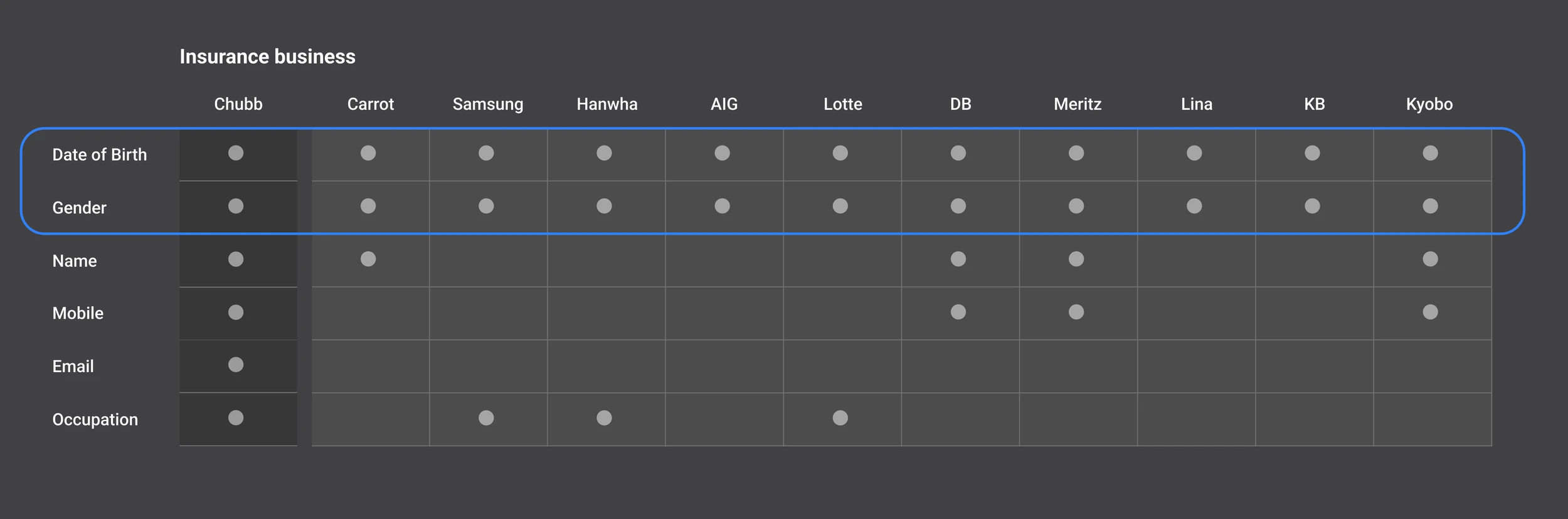
Over half of competitors only asked for date of birth and gender at the start
Most platforms delayed personal data collection until users committed to a plan.
Chubb’s early data capture conflicted with users’ mental models and reduced trust.
Design Constraint: Entry Points for Business Needs and User Readiness
Before reframing the experience, it was important to acknowledge a key business constraint. Collecting detailed personal information was essential for accurate pricing, regulatory compliance, and downstream marketing and CRM workflows, and could not be removed without impacting the business.
The UX challenge, therefore, was not whether to collect personal data, but when users were psychologically ready to provide it. This tension between business requirements and user trust became the foundation for the design approach.
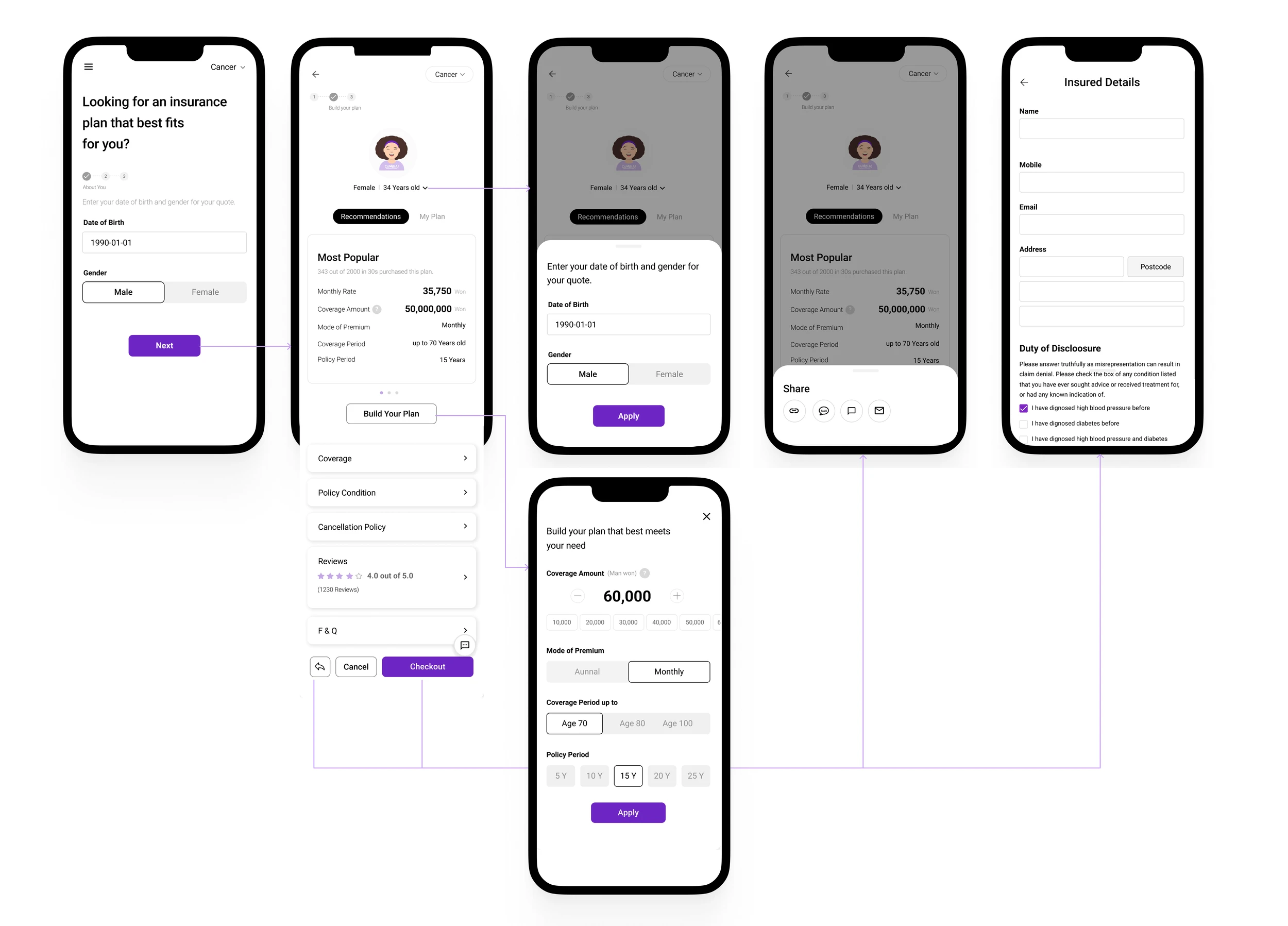
Based on research, I reframed the experience around intent-driven entry points, allowing users to move forward in ways that matched their readiness and confidence. During the quote journey, users consistently hesitated at moments where trust and commitment increased. I identified three critical entry points and designed each to align with user intent while supporting business goals.
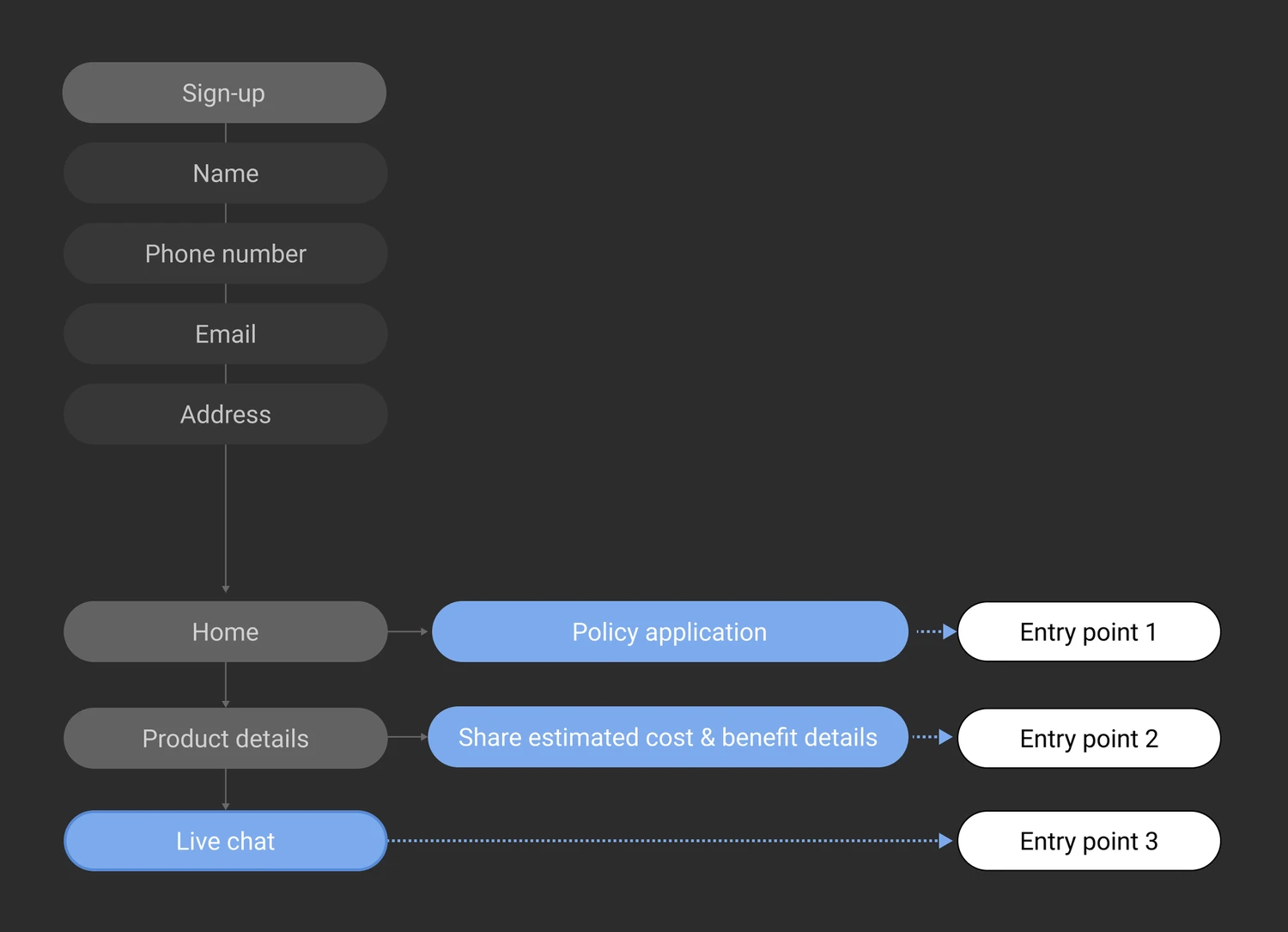
Entry Point 1: Submitting the Application
At this stage, users demonstrate high intent and decision confidence, signaling readiness to proceed and a clear expectation that providing personal information is a necessary step toward completion.
Entry Point 2: Sharing Estimated Cost & Benefits
Here, users are in a validation and comparison mindset, wanting to reflect, compare options, or involve others before committing, which indicates a need for reassurance rather than immediate progression.
Entry Point 3: Seeking Assistance from an Agent
This entry point supports users who experience uncertainty or risk sensitivity, where reassurance about security and process clarity becomes essential before they are willing to provide detailed personal information through a secure system flow.
Information Architecture Restructuring
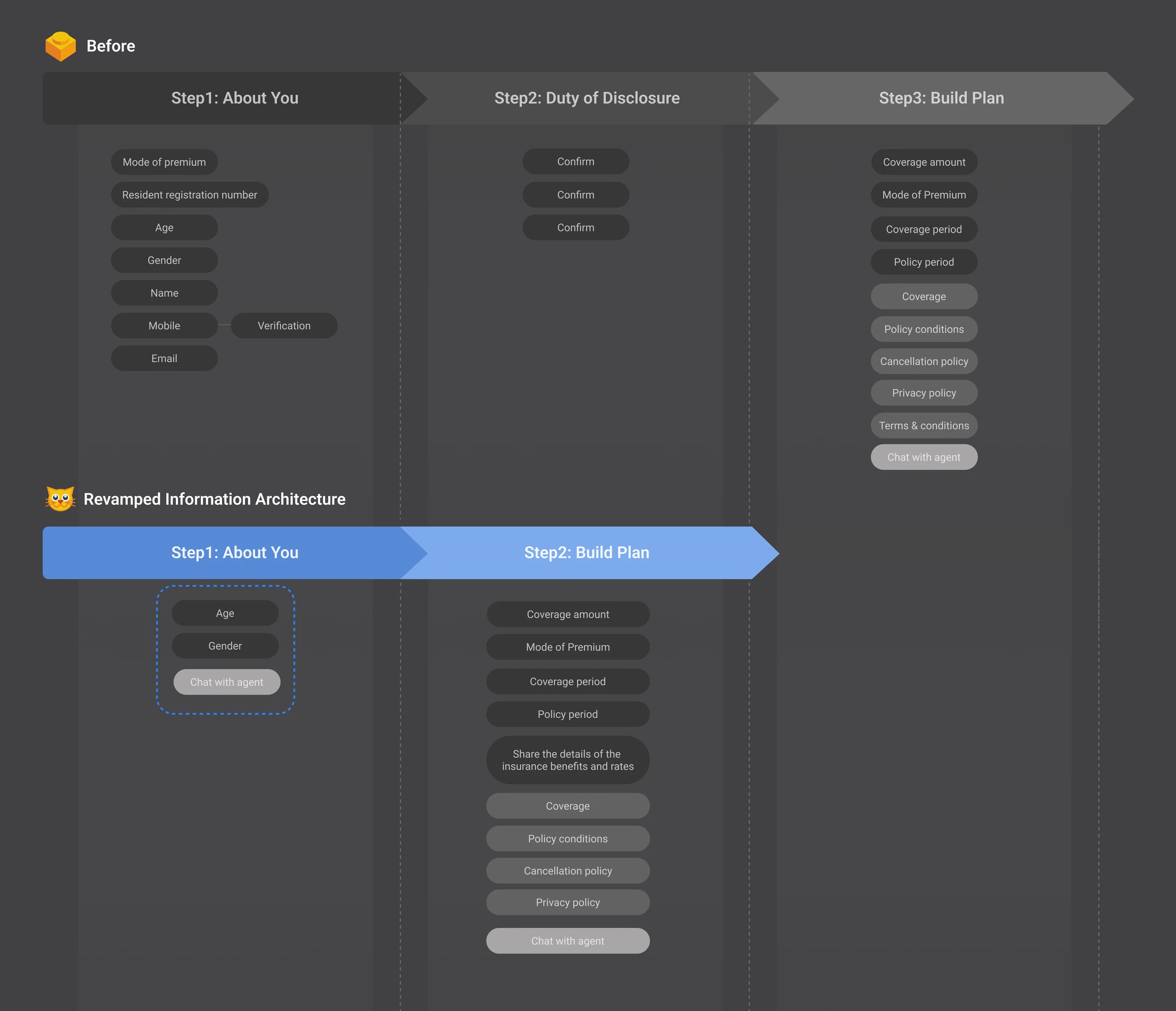
I also restructured the flow so:
Only essential information is collected at the start.
Personal data is requested after plan selection or application submission.
Steps are grouped into clear, manageable stages.
This reduced perceived effort and aligned the flow with user expectations.
Final Design
The final experience focused on:
Clear guidance at decision points
Reduced cognitive load
Strong visual hierarchy
Reassurance around data privacy and next steps
Results & Impact
2.5× increase in conversion rate
22% reduction in customer support tickets
50% increase in Net Promoter Score (NPS)
The redesigned flow improved both user confidence and business performance.
Reflection
This project reinforced the importance of designing for trust and intent in high-stakes financial products where personal data is a business necessity. Aligning UX decisions with real user behavior made the experience clearer, more human, and more effective.