Role:
UX/UI Designer
Timeline:
6 months
Platform:
Website
Deliverables:
UX strategy, research, IA, wireframes, UI design, prototyping, usability validation
Hyundai Motor Group: Designing a Global Brand Experience Beyond Organizational Silos
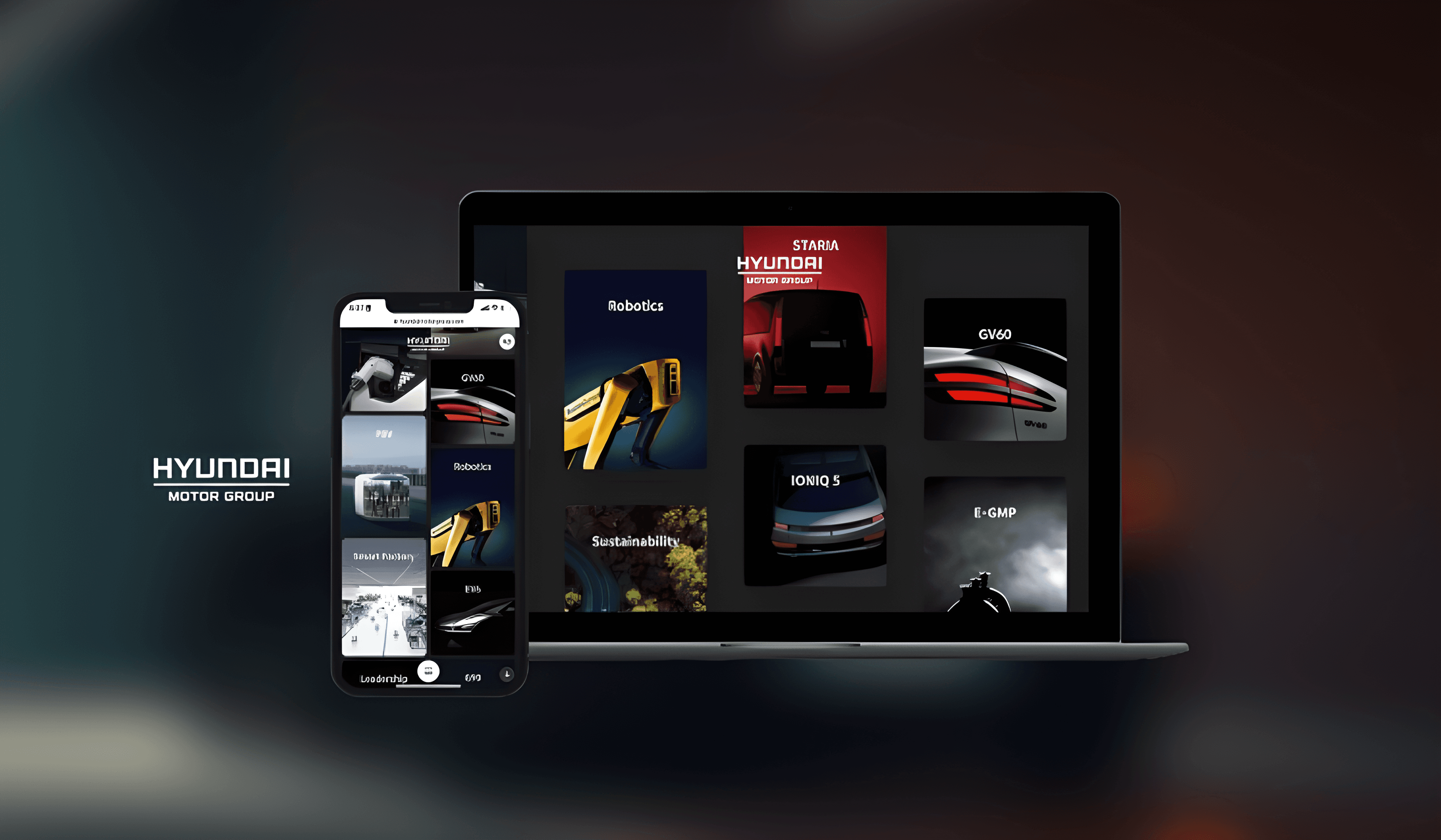
Hyundai Motor Group’s global website serves multiple internal organizations—brand, PR, HR, subsidiaries, and media—while also supporting a wide range of external users.
The challenge was not a lack of content, but how organizational structure unintentionally shaped the user experience.
This project focused on resolving the tension between organizational complexity and user clarity.
Organizational Complexity Was Driving the Experience
Internally, content was structured by:
Departments
Channels
Subsidiaries
Ownership boundaries
Externally, users arrived with very different intentions:
Journalists looking for the latest news
Job seekers researching the company
Potential customers exploring innovation
Internal stakeholders accessing references
However, the website treated all users the same.
As a result, organizational logic leaked into the interface, creating friction and confusion.
Symptoms on the User Side
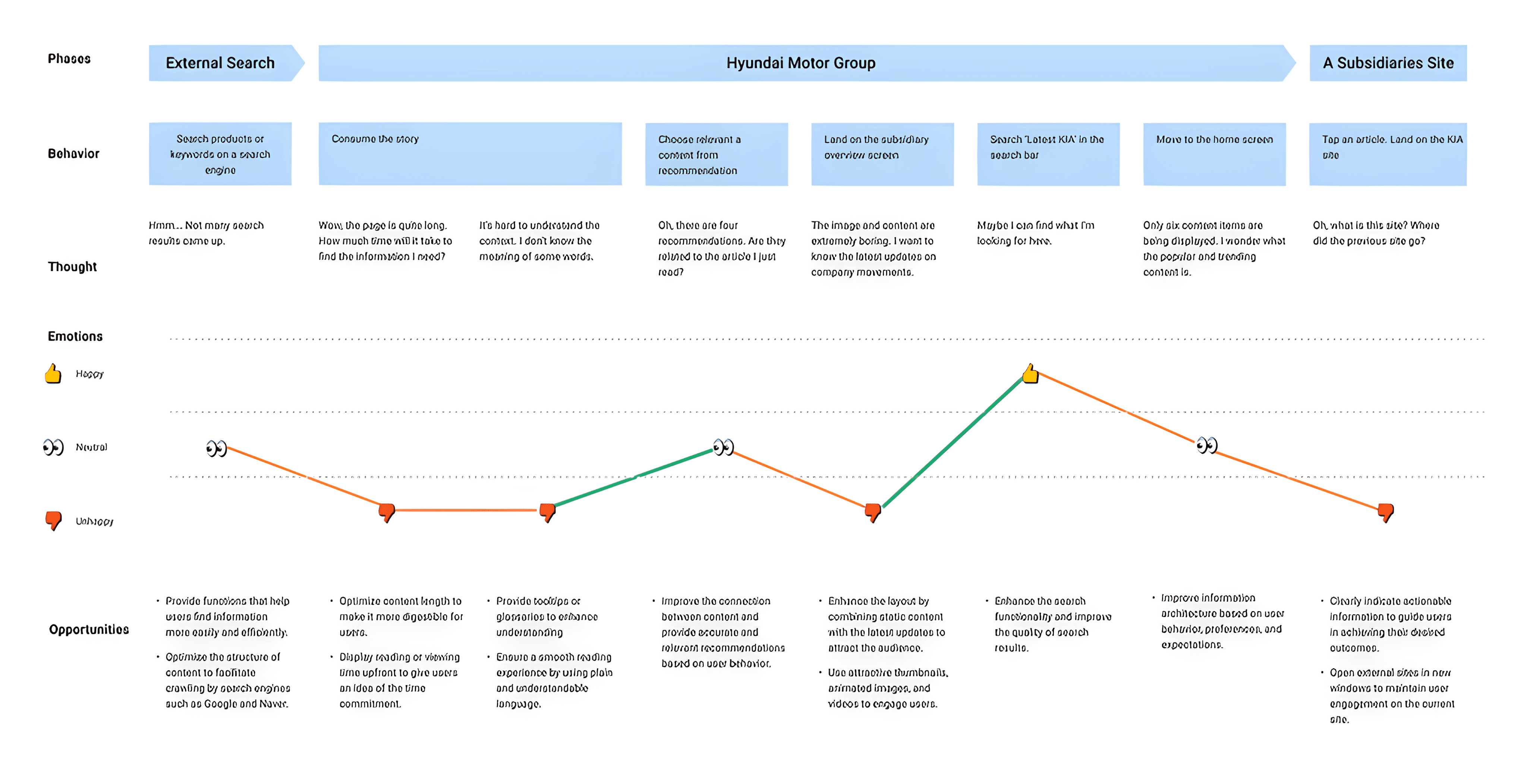
Users landed on content through search engines but rarely explored further
Navigation felt overwhelming and unclear
Content appeared fragmented rather than connected
Users struggled to understand “where they were” within Hyundai’s ecosystem
What We Observed
Symptoms on the System Side
Each department prioritized visibility of their own content
Homepage and navigation became a compromise, not a strategy
No clear ownership of the user experience end-to-end
This created a system where:
"Everything was important, which made nothing feel relevant."
Instead of asking:
Which department owns this content?
Which channel should this live under?
We reframed the problem around user intent.
The experience should adapt to why the user arrived, not how the organization is structured.
Users Don’t Think in Departments
Their mental model was closer to:
“I want to understand Hyundai’s innovation”
“I want the latest updates”
“I want to explore career opportunities”
—not:
“I want content from the PR team”
“I want subsidiary-owned pages”
We designed the experience so that:
Internal complexity stays behind the scenes
Users move through clear, purpose-driven paths
This required decoupling content presentation from organizational ownership.
Solution 1: Intent-Based Entry Points
Instead of exposing users to all content equally, we prioritized entry points based on why users arrive.
Examples:
Explore innovation & technology
Follow brand stories and news
Discover subsidiaries and businesses
Learn about careers and culture
Each path curated content from multiple departments, without revealing internal boundaries.
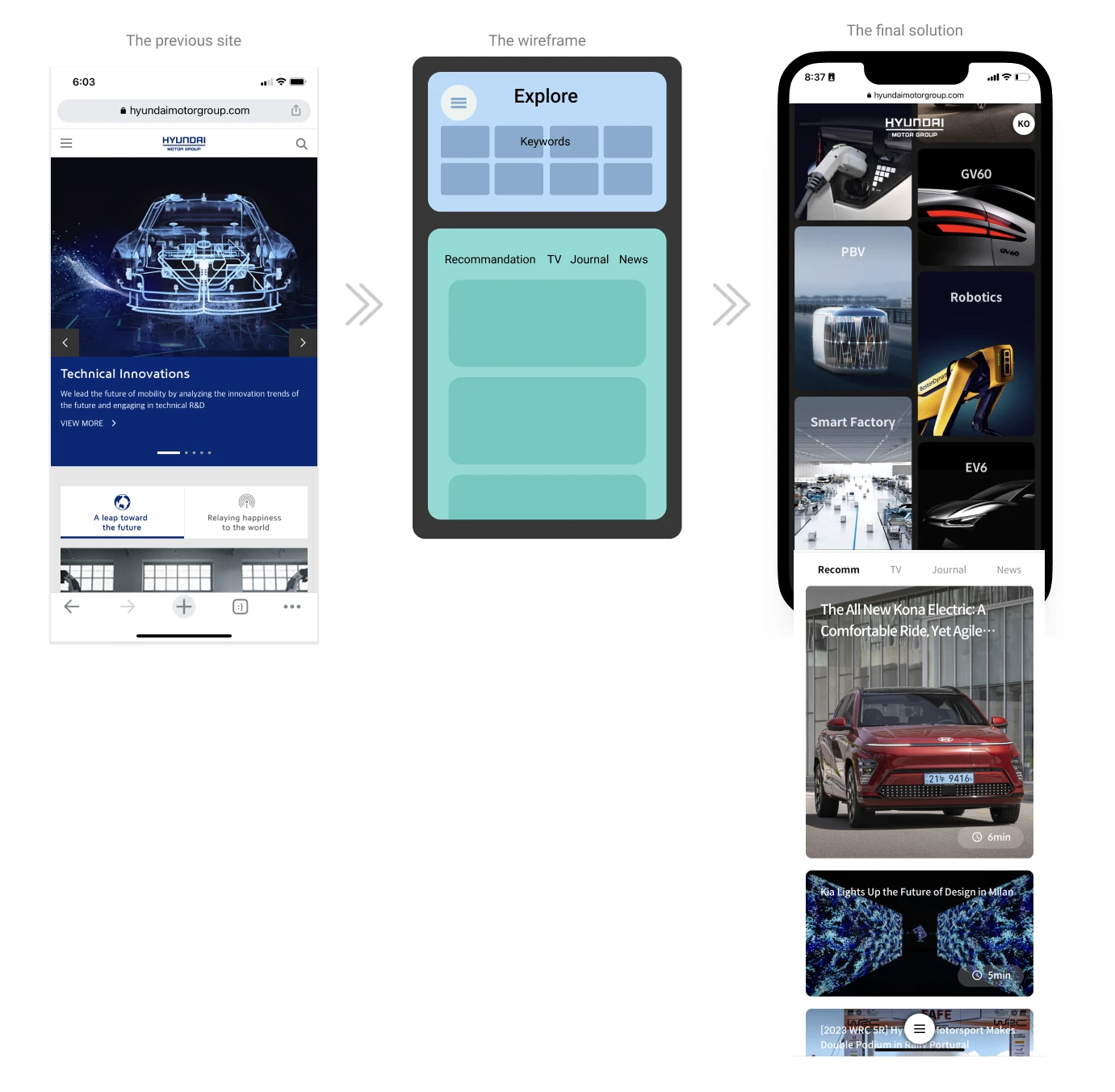
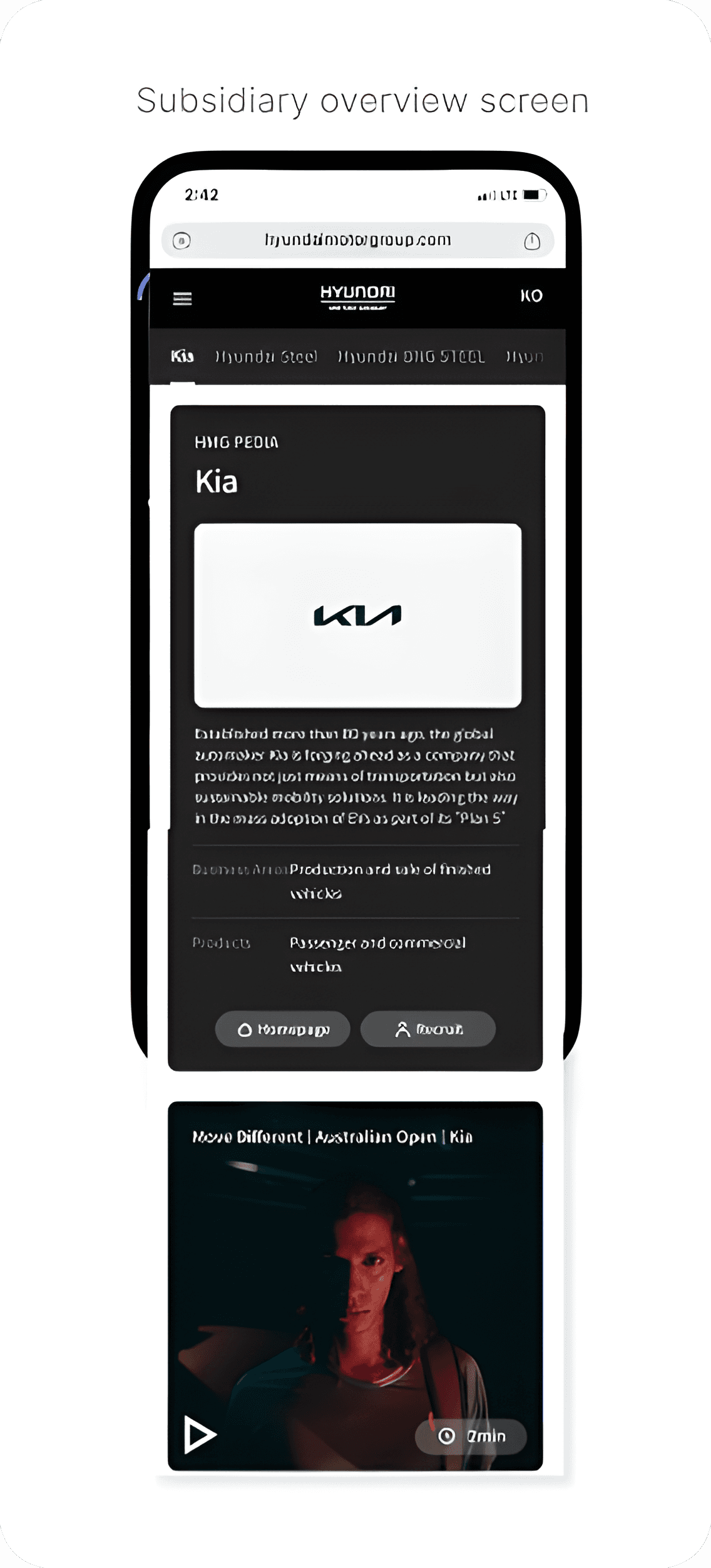
Solution 2: Clear Ecosystem Context
Users frequently moved between:
Hyundai Global
Subsidiary sites
Related brand content
Previously, these transitions caused confusion.
We introduced:
Clear ecosystem cues
Persistent brand context
Smooth transitions between global and subsidiary content
So users always understood:
where they are and how it relates to Hyundai as a whole.
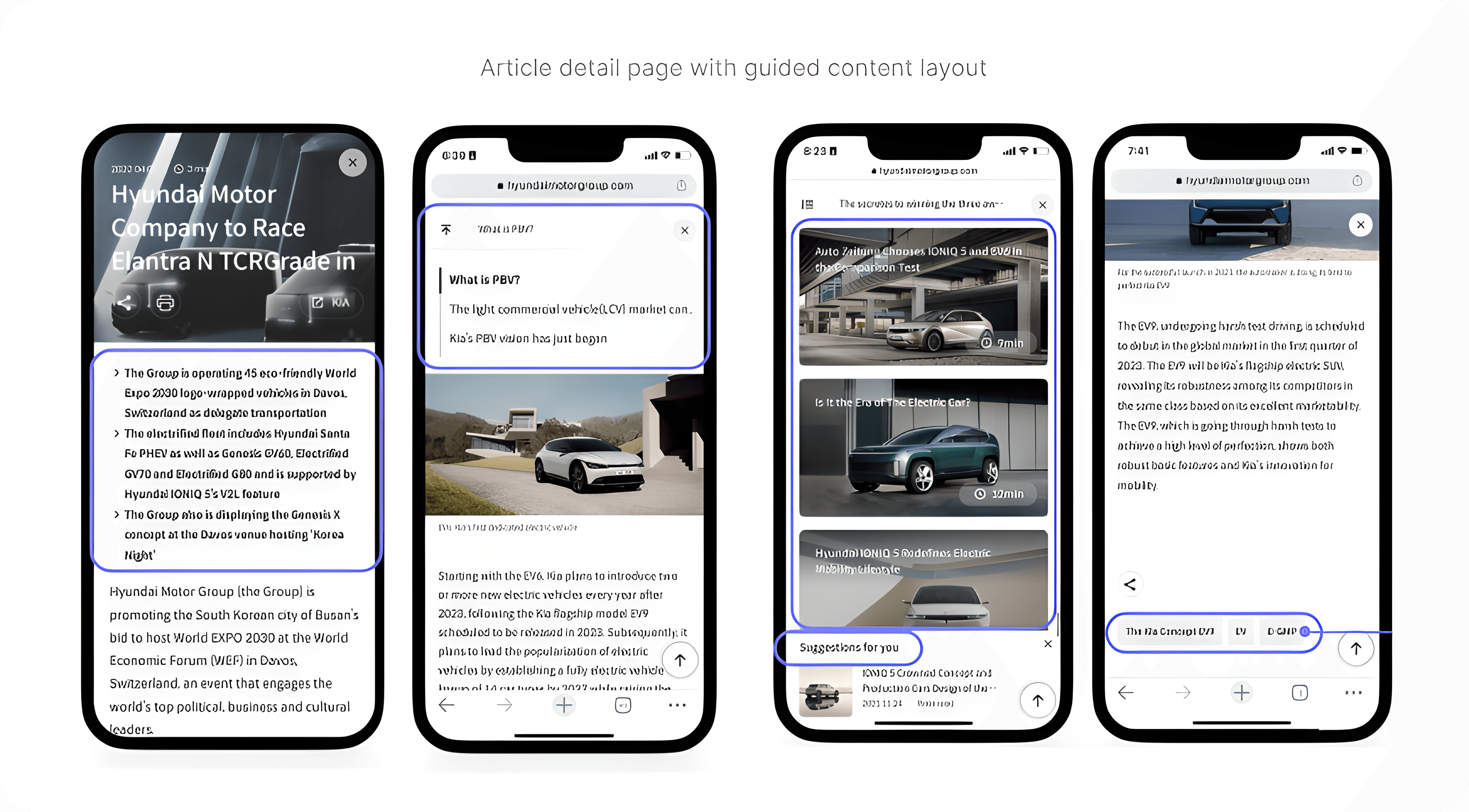
Solution 3: Content That Guides, Not Dumps
Rather than listing content by department or channel, we redesigned content layouts to:
Surface key takeaways early
Support scanning over long reading
Guide users to relevant next steps
This helped users make decisions, not just consume information.
Decisions and Trade-offs
How we negotiated content priorities across teams
Trade-offs between global consistency and flexibility
What we chose not to show on the website
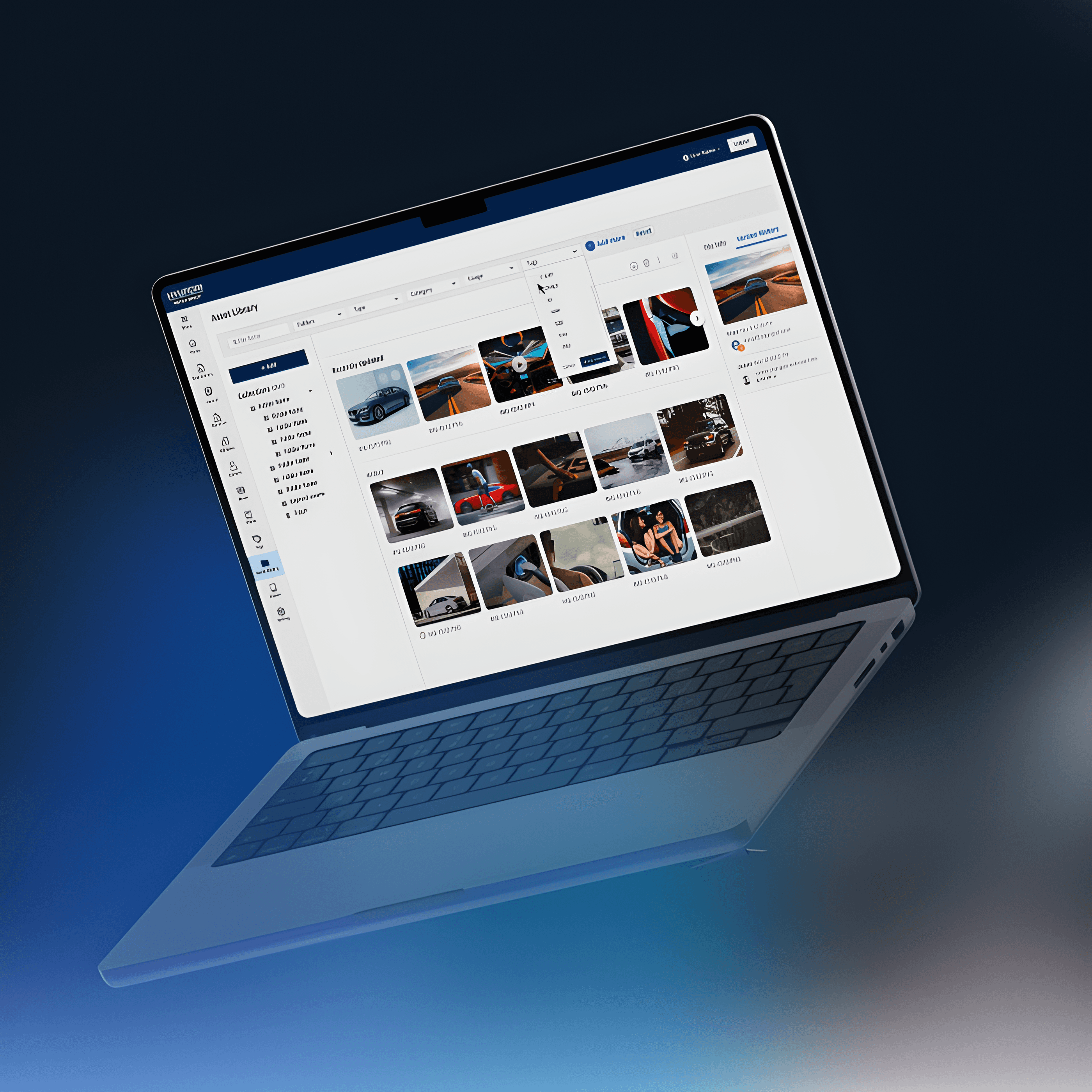
How this approach scales to CMS and DAM systems
Impact
Users could enter through search and still find meaningful next steps
Navigation felt intentional rather than overwhelming
Content felt connected, not siloed
Organizational complexity was hidden without being erased